Home / About
What is shogi—and why teach it?
Shogi (将棋, shōgi) is Japan’s classic two-player strategy game. Its rules create a practical setting for planning, attention, patience, respectful turn-taking and learning from mistakes.
Shogi Asia is a free independent resource helping people across Asia learn, teach and share shogi as a thoughtful learning activity.
The basics
- Board: 9×9 = 81 squares (slightly taller than wide)
- Pieces: 40 total — 20 per player
- Players: Sente (Black, the first player) and Gote (White, the second player)
- Goal: Checkmate the opponent’s King
- Look: Same wood color for both sides — identity is kanji + tip direction
Three “wow” rules
- Capture by landing on an enemy piece.
- Drop: A drop means placing a captured piece from your hand back onto an empty square.
- Promote: Most pieces can flip to stronger moves in the enemy’s last three ranks (files are columns; ranks are rows). King & Gold never promote.
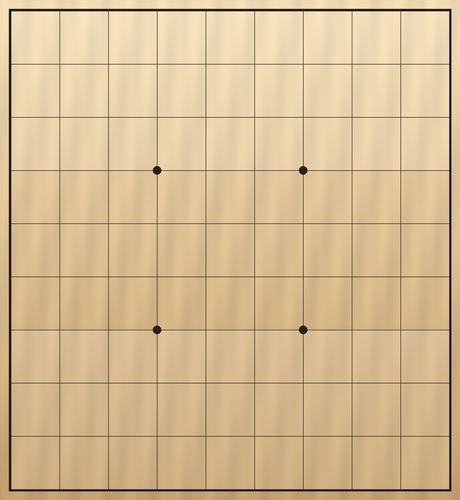
How a game feels
Both players start with the same army. Pieces point toward the opponent. You alternate turns moving one piece or dropping one from your hand. A failed plan is visible on the board, giving players a concrete chance to pause, review, adapt and try again.
A welcoming game to learn
Shogi is a turn-taking strategy game like chess, with one big twist: when you capture a piece, you can later place it back as your own. You do not need to speak Japanese — English names work, and the characters on the pieces become familiar visual patterns.
Why teach shogi?
- Thinking ahead — comparing choices before moving
- Observation — tracking threats, patterns and consequences
- Resilience practice — recovering after a lost piece or failed plan
- Respect and etiquette — turn-taking, greetings and handling wins and losses
These are learning opportunities, not medical, intelligence or developmental guarantees. Outcomes depend on the learner, the teacher and the setting.
Rules you will meet later
Begin with all eight movement patterns, capture, drop, and a guide-open game. Add these exceptions after players have felt why they matter:
- Nifu (two pawns): you may not have two unpromoted pawns on the same file.
- No dead drops: you cannot drop a Pawn, Lance, or Knight where it has no legal move.
- Uchifu-zume: you cannot deliver checkmate by dropping a Pawn (other mates are fine).
- Forced promotion: if a Pawn, Lance, or Knight would have no move next turn, it must promote when it can.
Details live in the Learn reference.
What you need to start
- Print pack — A3 board + 40-piece set + A4 moves guide
- A ready set and about 15–20 minutes for an open-book first game
- No perfect memorisation — keep the move guide between both players
- Next step: an open-book first game, then online practice or a local shogi dojo
See all 8 moves
Start a first game
Explore shogi across Asia
Privacy
- This static site has no accounts and stores no profiles on a server.
- Print checklists, puzzle progress and contrast preference use your browser’s localStorage only. Private mode may clear it.
- The site does not look up your location or infer a country from your browser language.
- Pages load display fonts from Google Fonts. The site also uses Google Analytics 4, provided by Google, to measure page views and general site usage; Google may process technical information under its privacy policy. The site itself has no accounts or server-side profiles.
- External sites, including Lishogi and 81Dojo, have their own privacy policies.
- For children, use online services only with a parent or teacher, follow the service’s current age rules, and never share a real name or contact details in a public game or chat.
License & affiliation
Original site text, code, summaries and AI-generated project artwork are available under CC BY 4.0. Please credit Shogi Asia, link the license and note changes. Source pages, names, trademarks and external services keep their own rights. Not affiliated with, endorsed by or licensed by the Japan Shogi Association.